
Ned Jarrett, two-time Cup champion turned broadcaster, dead at 93
Authored by zh-ayx-sports.com, Jun 06, 2026
Ned Jarrett, two-time Cup champion turned broadcaster, dead at 93
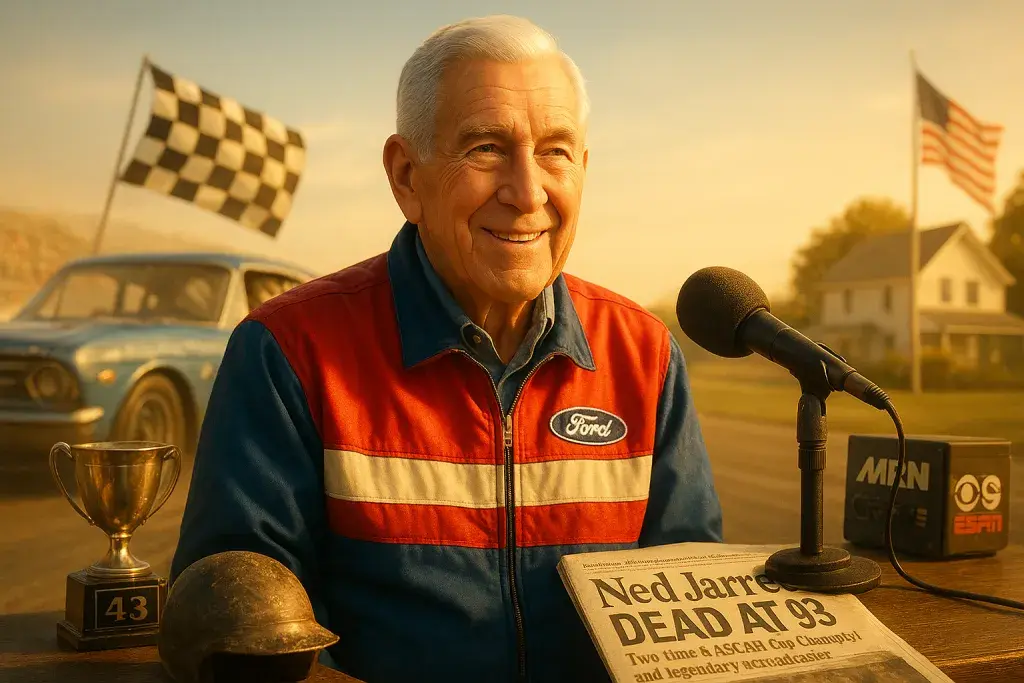
Ned Jarrett, a NASCAR Hall of Famer who built parallel legacies as a championship-winning driver and a celebrated motorsports broadcaster, died of natural causes at his home in Newton, North Carolina. He was 93.
Jarrett competed in NASCAR's Cup Series from 1953 to 1966, having taken up racing after Hickory Speedway opened near the family farm and sawmill where he worked. "I played a little basketball and baseball in high school (and) thought I had some athletic ability," he said, according to NASCAR. "When they opened the speedway, I ran the first race they ever run there. I was hooked." Named one of NASCAR's 50 Greatest Drivers in 1998, Jarrett remains the all-time wins leader among Ford drivers with 43 Cup victories - a record that current competitors have not threatened. Team Penske's Joey Logano, the highest-active Ford driver on that list, has 35 of his 37 career wins with the manufacturer.
After retiring from driving, Jarrett moved into broadcasting, beginning as a pit reporter on radio for Motor Racing Network before transitioning to television work with CBS and ESPN. His most enduring moment behind the microphone came during the 1993 Daytona 500, when he called a late-race duel between his son Dale Jarrett and Dale Earnhardt Sr. - his partiality undisguised on air. "You know who I'm pulling for, it's Dale Jarrett. Bring her to the inside, Dale, don't let him get down there," he said during the broadcast. "He's gonna make it! Dale Jarrett's gonna win the Daytona 500! Alright!" Dale did win. Both of Ned's sons - Dale and Glenn - followed him into broadcasting after their own racing careers concluded.
Jarrett's death extends a period of loss for the NASCAR community. His wife Martha, to whom he was married for 67 years, died in 2023. He is survived by his children and a career record that spans the sport's foundational era through its modern broadcast expansion.